









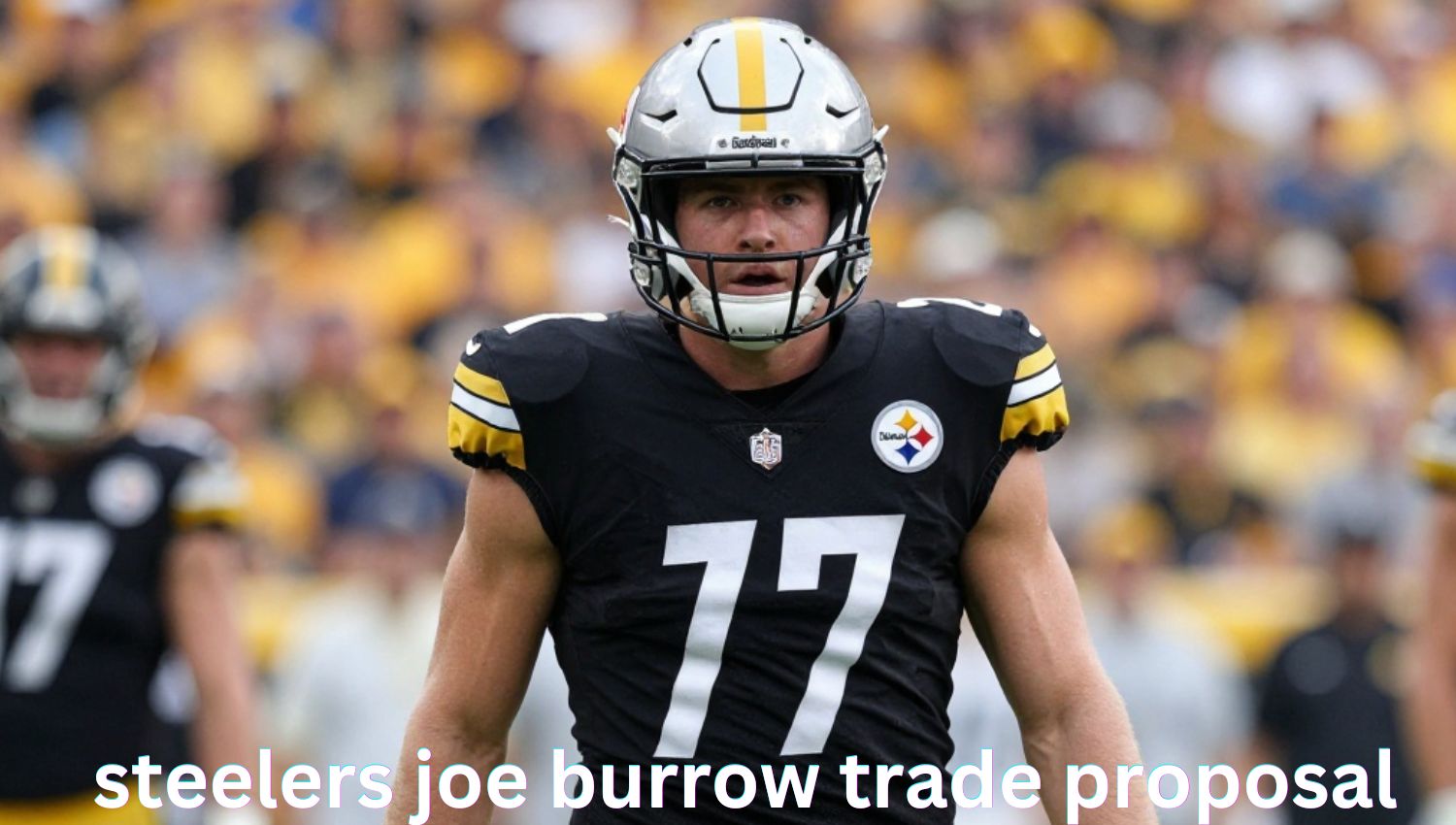
Steelers Joe Burrow Trade Proposal Explained
The phrase steelers joe burrow trade proposal has become a popular topic among NFL fans, analysts, and sports media discussions. Whenever a franchise quarterback reaches elite status, trade speculation naturally follows, even when the chances of a deal happening are extremely low. In this case, the conversation centers on whether the Pittsburgh Steelers could somehow acquire Cincinnati Bengals quarterback Joe Burrow.
At first glance, the idea sounds exciting. Burrow is widely regarded as one of the NFL’s premier quarterbacks, while the Steelers have spent recent years searching for long-term stability at the position following the retirement of Ben Roethlisberger. Combining a franchise quarterback with one of the league’s most respected organizations creates an intriguing hypothetical scenario.
However, there is a significant difference between an entertaining discussion and a realistic NFL transaction. Understanding that difference is essential for evaluating any trade proposal involving Burrow and Pittsburgh.
This article explores the origins of the speculation, the financial realities, the competitive implications, and whether such a blockbuster move could ever occur.
Understanding Joe Burrow’s Value
Why Burrow Is Considered Elite
Joe Burrow has established himself as one of the NFL’s most valuable players. Since entering the league, he has demonstrated exceptional leadership, accuracy, pocket awareness, and decision-making ability.
Several factors contribute to his value:
- Franchise quarterback status
- Proven playoff success
- Leadership qualities
- High football intelligence
- Ability to elevate teammates
- Long-term contract security
In today’s NFL, elite quarterbacks are the most difficult assets to acquire. Teams spend years searching for players capable of consistently competing at the highest level. Once a franchise finds one, it rarely allows him to leave.
The Bengals’ Investment in Burrow
Cincinnati has built much of its organizational future around Burrow. The team’s roster construction, offensive philosophy, and long-term planning revolve around maximizing his strengths.
Moving on from a quarterback of this caliber would require extraordinary circumstances. Such situations are uncommon in professional football and usually involve major organizational changes, contract disputes, or player demands.
As of now, there is no credible evidence suggesting the Bengals intend to move away from their franchise quarterback.
Why Steelers Fans Discuss This Possibility
The Search for a Long-Term Answer
The Steelers enjoyed nearly two decades of quarterback stability with Ben Roethlisberger. Since his retirement, discussions regarding the future of the position have remained a major storyline.
Whenever a team lacks a firmly established elite quarterback, fans naturally imagine scenarios involving proven stars around the league.
Burrow often appears in those discussions because:
- He plays within the AFC North.
- Fans regularly watch him compete against Pittsburgh.
- His talent level is undeniable.
- He fits the Steelers’ competitive culture.
Rivalry Creates Fascination
One reason the topic generates so much attention is the rivalry factor.
The AFC North is among the NFL’s most competitive divisions. Watching a rival team’s superstar quarterback join Pittsburgh would dramatically alter the balance of power within the division.
The shock value alone fuels online debates and hypothetical trade discussions.
Could the Steelers Afford Joe Burrow?
Salary Cap Challenges
Modern NFL roster building revolves around salary cap management. Elite quarterbacks command enormous financial commitments, making blockbuster trades extremely complicated.
A team acquiring a player of Burrow’s stature must consider:
- Existing contract obligations
- Future salary cap flexibility
- Impact on roster depth
- Ability to retain key veterans
- Long-term financial planning
Even organizations with strong financial management face major challenges when attempting to absorb contracts associated with superstar quarterbacks.
Draft Capital Costs
The acquisition cost would extend beyond salary considerations.
The Bengals would likely demand an unprecedented package that could include:
- Multiple first-round picks
- Additional premium draft selections
- Young starting-caliber players
- Future draft assets
Such compensation could significantly affect Pittsburgh’s ability to build a balanced roster.
What a Realistic Trade Package Might Look Like
Estimating Market Value
When evaluating hypothetical trades, analysts often compare previous quarterback transactions involving star players.
However, Burrow’s situation differs from many past examples because:
- He is relatively young.
- He remains highly productive.
- He is the face of the franchise.
- The Bengals remain competitive.
As a result, his market value could exceed most quarterback trades seen in NFL history.
A theoretical offer might require:
- Three or more first-round picks
- Multiple additional selections
- Starting players
- Significant future assets
Even then, Cincinnati would have little incentive to accept.
Why the Bengals Would Likely Decline
From a football perspective, replacing an elite quarterback is extraordinarily difficult.
Draft picks carry uncertainty. Prospects may develop into stars, average starters, or complete disappointments.
The Bengals already possess a proven franchise quarterback. Trading that certainty for future possibilities would represent a massive risk.
Impact on the AFC North
Steelers Perspective
If Pittsburgh somehow acquired Burrow, the franchise would immediately become one of the most dangerous teams in the conference.
Potential benefits would include:
- Improved offensive efficiency
- Increased playoff expectations
- Greater consistency at quarterback
- Enhanced attractiveness to free agents
A quarterback of Burrow’s caliber can transform a team’s outlook almost overnight.
Bengals Perspective
For Cincinnati, losing Burrow would create major uncertainty.
Even with substantial draft compensation, replacing elite quarterback play remains one of the greatest challenges in sports.
History shows that franchises often spend years searching for another player capable of leading deep postseason runs.
Real-World Obstacles to the Trade
Division Rival Concerns
NFL teams rarely trade superstar players to direct division rivals.
Doing so strengthens a team that must be faced twice every season and potentially in playoff competition.
For Cincinnati, sending Burrow to Pittsburgh would mean helping one of its biggest rivals improve dramatically.
This factor alone makes the proposal highly unlikely.
Organizational Stability
Another obstacle is organizational stability.
Teams typically consider moving franchise quarterbacks when faced with:
- Rebuilding periods
- Contract disputes
- Locker room issues
- Major front-office changes
None of those conditions currently provide a compelling reason for Cincinnati to move its cornerstone player.
Fan and Business Considerations
Quarterbacks influence more than wins and losses.
They impact:
- Ticket sales
- Merchandise revenue
- National exposure
- Brand recognition
- Long-term fan engagement
Burrow is one of the most recognizable faces associated with the Bengals organization. Trading him would create consequences extending far beyond football operations.
Common Misconceptions About the Proposal
A Massive Offer Guarantees a Deal
Many fans assume every player has a price.
While technically true, NFL teams often value elite quarterbacks beyond what draft compensation can reasonably replace.
The challenge is not determining a fair return. The challenge is finding a replacement capable of producing similar results.
Division Trades Never Happen
Division trades do occur, but blockbuster trades involving franchise quarterbacks are exceptionally rare.
The competitive implications are usually too significant for teams to ignore.
Salary Cap Space Solves Everything
Cap space helps facilitate trades, but it does not create motivation for the other team to part with an elite player.
The Bengals’ decision would primarily revolve around football value rather than financial flexibility.
What NFL History Tells Us
Looking at NFL history reveals a consistent pattern.
Teams aggressively search for franchise quarterbacks because they are among the league’s most valuable assets.
Examples across multiple eras demonstrate that organizations typically hold onto elite quarterbacks for as long as possible.
When elite passers are moved, unusual circumstances often exist, such as age concerns, contractual disputes, retirement considerations, or organizational transitions.
Burrow does not currently fit those categories.
As a result, historical precedent suggests that a trade remains extremely improbable.
FAQs
Is there any credible report that the Steelers are pursuing Joe Burrow?
No. There is currently no credible evidence indicating that Pittsburgh is actively pursuing a trade for Joe Burrow.
Why do fans keep discussing a Steelers Joe Burrow trade proposal?
The discussion exists because Burrow is an elite quarterback and the Steelers have experienced uncertainty at the position since Ben Roethlisberger’s retirement.
Would the Bengals consider trading Burrow?
Based on available information, there is no indication that Cincinnati is interested in moving its franchise quarterback.
How many draft picks could Joe Burrow be worth?
A hypothetical trade could require multiple first-round selections and additional premium assets, though the exact value is impossible to determine.
Has an elite quarterback ever been traded before?
Yes, but such trades are uncommon and often involve unique circumstances that do not currently apply to Burrow.
Would the Steelers become Super Bowl contenders with Burrow?
A quarterback of Burrow’s caliber would significantly improve any roster, though championships still depend on coaching, defense, health, and overall team construction.
Conclusion
The steelers joe burrow trade proposal is one of the NFL’s most fascinating hypothetical discussions, but it remains far closer to fantasy than reality. Joe Burrow represents the type of quarterback every franchise hopes to find, making him one of the league’s most valuable assets. For Cincinnati, trading a proven franchise cornerstone would introduce enormous risk with little practical benefit.
While fans will continue imagining blockbuster scenarios and debating potential trade packages, the realities of roster construction, salary cap management, divisional competition, and organizational strategy make such a move extremely unlikely. The proposal succeeds as an entertaining football conversation, but current circumstances provide little reason to believe it could become an actual NFL transaction.